The Role of Art in a Corporate Interior
Your office starts speaking before the meeting begins. In a corporate interior, intentional art can strengthen first impressions, give important rooms presence, and help your business feel more credible.
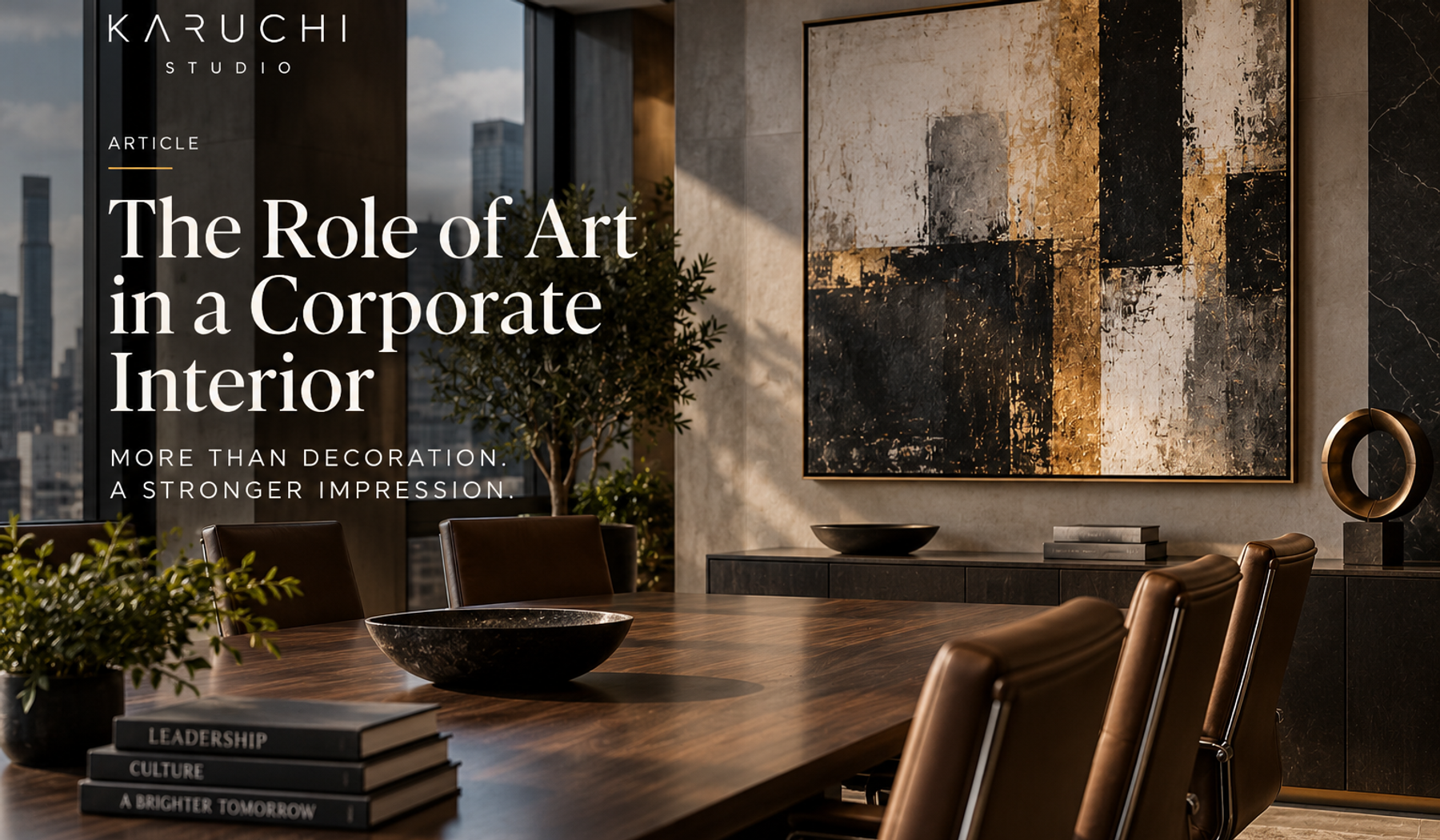
Before a client hears your pitch, before an investor sits through your presentation, before a partner studies your proposal, they have already experienced something important:
Your space.
They have walked into your reception.
They have looked around your boardroom.
They have noticed the wall behind your desk.
They have quietly formed an impression.
That impression may not be spoken out loud, but it still matters.
A corporate space can make a company feel established, serious, thoughtful, and trustworthy. Or it can make the same company feel generic, temporary, or unfinished.
This is where art plays an important role.
Not as decoration.
As part of the impression your business makes.
Your Office Is Already Speaking
Every corporate space communicates.
The furniture says something.
The lighting says something.
The finishes say something.
The empty walls say something too.
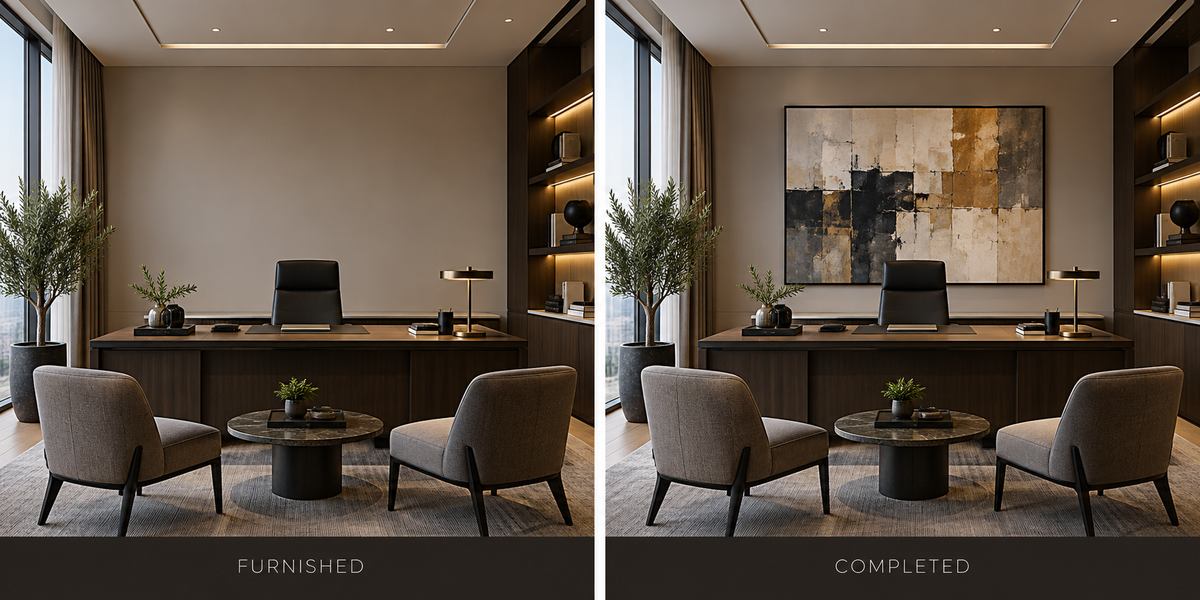
A blank reception wall can make an office feel like it was furnished but not completed.
A generic canvas behind an executive desk can make a serious room feel ordinary.
A boardroom with nothing visually considered can feel functional, but not authoritative.
This does not mean every wall needs art.
It means the important walls should not be treated casually.
Because in a professional space, the room is part of the conversation.
Before you explain your standards, the space has already suggested them.
Art Gives Important Spaces Presence
Some rooms carry more weight than others.
A reception area is not just a place where people wait. It is the first handshake of the business.
A boardroom is not just a table and chairs. It is where decisions, trust, and serious conversations happen.
An executive office is not just a workspace. It is often a visual expression of leadership, confidence, and judgment.
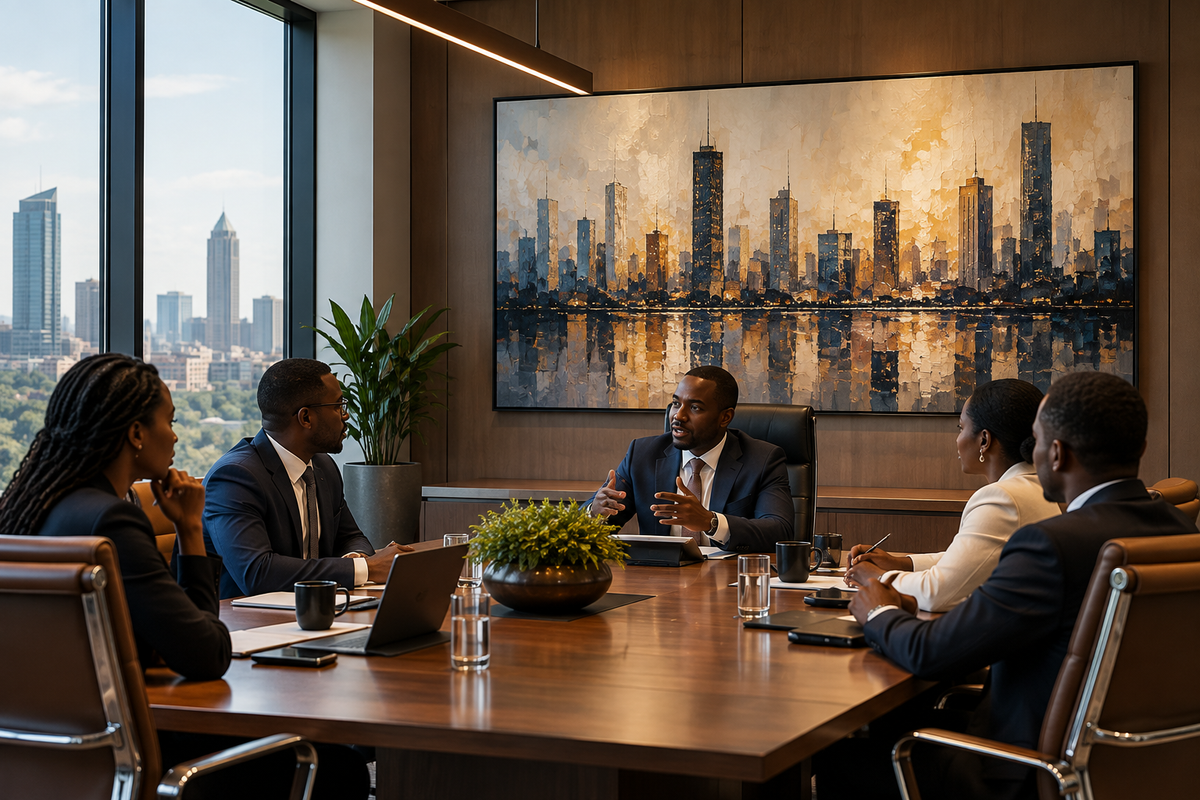
Art can give these spaces the presence they need.
A strong artwork in reception can make the company feel more established.
A restrained piece in a boardroom can support focus and seriousness.
A meaningful artwork behind an executive desk can give the room more authority without needing to shout.
The right art does not have to be loud.
In many corporate spaces, restraint is more powerful than excess.
What matters is that the art feels deliberate, not accidental.
Generic Art Can Weaken a Serious Business
Many corporate interiors are polished but forgettable.
The chairs are good.
The lighting is good.
The signage is in place.
The finishes are clean.
But the space still feels like it could belong to any company.
That often happens when art is chosen only to fill empty walls.
Generic art works like stock photography. It may be acceptable, but it rarely makes the company feel distinct.
When a client sees artwork they have already seen in hotels, waiting rooms, online catalogs, or other offices, the space loses some of its specificity.
Intentional art does something different.
It helps the space feel like it belongs to this organization.
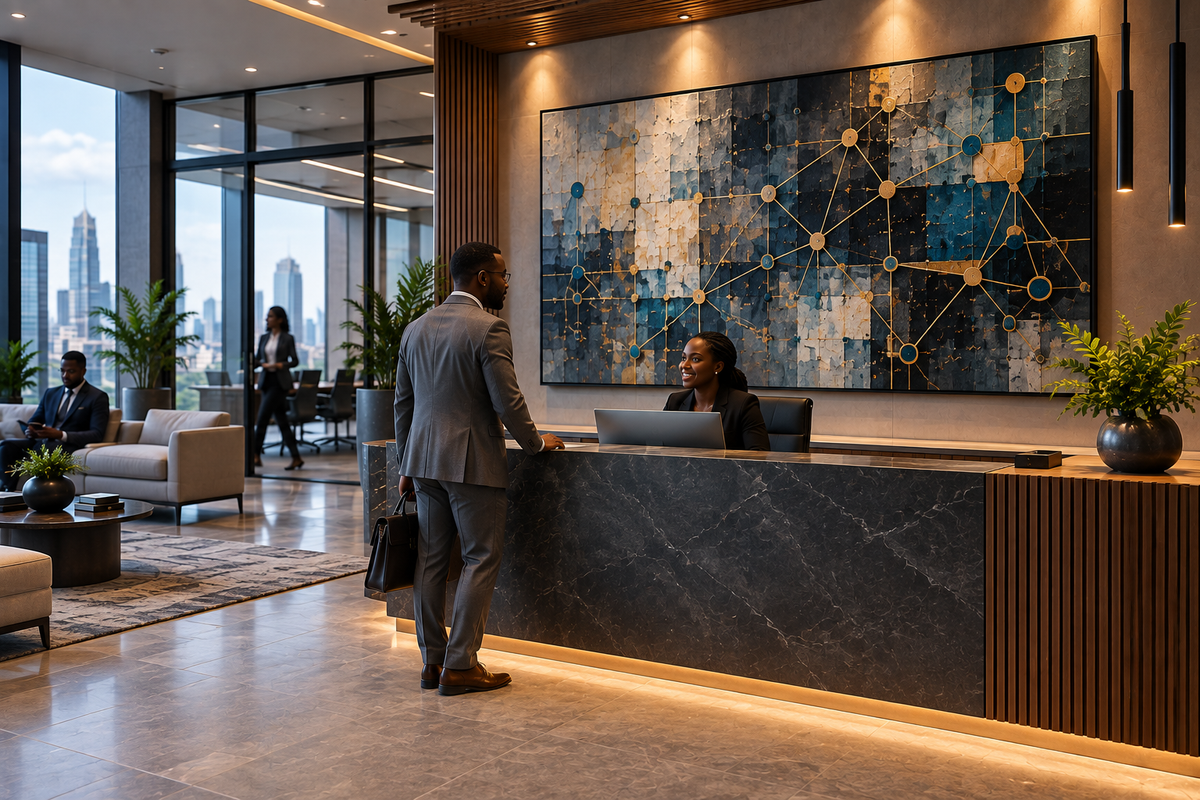
It may express stability, ambition, heritage, innovation, discipline, confidence, or vision.
Not by putting a slogan on the wall.
Not by repeating the logo.
But through symbolism, scale, material, color, texture, and mood.
The best corporate art does not merely decorate the office.
It helps the office feel more like the company behind it.
Art Should Support What the Space Needs to Say
The mistake many businesses make is choosing art the same way they choose a decorative object.
They ask:
“Does this look nice?”
That question matters, but it is not enough.
A better question is:
“What should this space communicate?”
If the room receives clients, the art may need to support trust.
If the room hosts serious decisions, the art may need to carry weight.
If the office represents a founder or leadership team, the art may need to express conviction, vision, or identity.
If the space feels too plain, the art may need to add presence.
If the space feels too cold, the art may need to introduce warmth.
That is the value of intentional art.
It does not begin with the artwork alone.
It begins with the impression the space needs to make.
Final Thoughts
Art matters in a corporate space because a corporate space is never neutral.
It affects how people perceive the organization.
The right art can make important rooms feel more complete, more confident, more distinctive, and more aligned with the business they represent.
The wrong art can quietly weaken the same space.
And no art at all can leave the room feeling unfinished.
The best corporate art is not simply the piece that looks attractive by itself.
It is the piece, set, or collection that supports what the space needs to say.
Bring Intentional Art Into Your Corporate Space
KARUCHI Studio helps corporate and executive spaces use art to strengthen authority, professionalism, identity, and visual presence.
Whether you are completing a reception area, boardroom, executive office, client-facing area, or full office environment, KARUCHI Studio can help you create art that belongs to the purpose of the space.
Start with the impression your space needs to make. Then let KARUCHI Studio help you create the art that supports it.